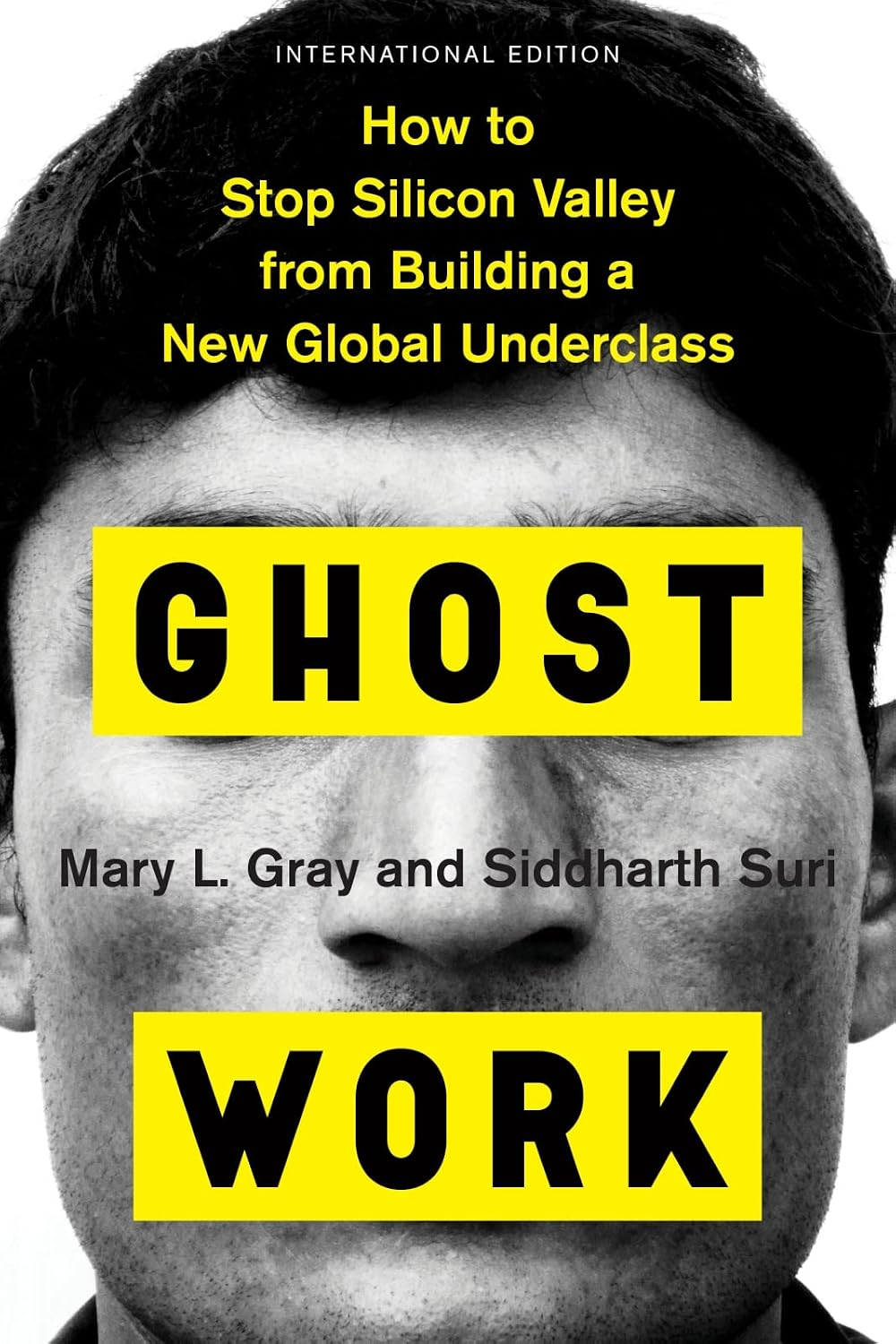
This week’s review is of Ghost Work: How to Stop Silicon Valley from Building a New Global Underclass by Mary L. Gray and Siddharth Suri.
A relatively short book that still felt too long, Ghost Work aims to share what the pre-AI online work force looks like. The authors present interviews, some data, and a series of anecdotes across five chapters prior to presenting some possible solutions. However, such solutions, especially in the AI-age, underdeliver on the subtitle’s promise.

The idea of ghost work – or digital, project-based temporary employees serving as stands in for automated systems – is an important one. However, the exploitation of these workers is treated with better analysis by Karen Hao in Empire of AI or Atlas of AI by Kate Crawford than this oddly repetitive text. The thesis basically points to the idea that APIs (the connections between projects) and the temporary nature of such work dehumanizes these workers. At the same time as critiquing these aspects, Gray and Suri point to some more worker-oriented companies/policies and a host of reasons why such work is beneficial to workers in both the United States and India. As stated in the introduction: “all of the workers we interviewed have something unexpected in common: hope” (xxvi). Rather than seeming fair or balanced; the book feels bi-polar – lurching between critique and approval.
This project draws on five years of interviews with Americans and Indians and examines four different ghost work platforms. The book begins with a basic history of ghost work, from label imagining to data validation; then broadens the historic aperture to look at labor in the industrial age. This examination touches on the legal rights of full-time workers and the exclusion of part-time positions and roles; leading to more exploitation in a digital economy. The idea that “factory piecework” was the first ghostwork is certainly a new presentation of economic history and speaks to the difference in skill, expertise, availability, and economic reward that the roles have in common.
Part II focuses on ghost work in the present (remember this book draws on the mid-2010s for its present). Ghost work now means employees selling their labor on automated sites which take a cut from the connection between temporary projects and part-time workers. Little is made of the difference such labor makes to the employee for whom such a market is their full-time job or how such part-time work can lead to full-time employment. These systems can certainly be unjust but such analysis felt limited, perhaps by the unnecessary focus.
The third part and epilogue look at the ghost workers – their efforts to grow and collaborate while surviving and supports for them. The decision to put the ten fixes (which range from minor labor tweaks to full-scale socialism) in the epilogue is an odd one, given the aim of the book’s subtitle. Perhaps the advocacy for such a range of propositions ranging from one to four paragraphs for each proposal necessitated it being an add-on rather than an essential part-of the text. It is that very shallow nature that made this book disappointing and feel more like a C-level doctoral thesis than a work worthy of reading.
Ghost Work: How to Stop Silicon Valley from Building a New Global Underclass by Mary L. Gray and Siddharth Suri.
Rating: 1/5
Good For: Researchers looking to add depth to the argument for worker’s rights in the digital era and who need a starting place.
Best Nugget: none
Please note: As an Amazon Associate I earn from qualifying purchases. However, I am not paid to provide reviews or use content.
Leave a Reply